Health-Care Professional Award: Dr. Faith Davis
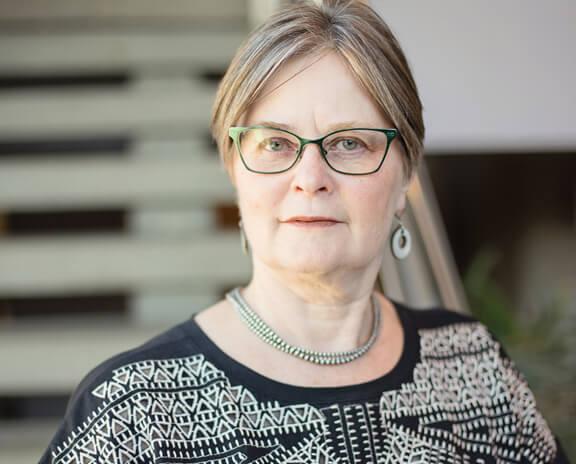
Dr. Faith Davis, of Edmonton, Alta., is the recipient of our Health-Care Professional Award.
This award recognizes a health-care professional who has demonstrated exemplary and compassionate care for the brain tumour community. It honours someone who has gone above and beyond in patient care, research or support services, making a lasting impact on those we serve.
Can you share your connection to the brain tumour community?
My connection to the brain tumour community comes through my work in research and my commitment to improving outcomes for people affected by brain tumours. My focus has been on understanding brain tumours at a population level and helping to build better systems for data, collaboration and research in Canada. Along the way, I’ve had the opportunity to work closely with patients, families, clinicians and advocates, which has deepened my understanding of the real-life impact of this disease and the importance of building a strong, supportive community.
As this year’s theme for National Volunteer Week is ‘Ignite Volunteerism,’ award winners were asked to answer the following questions with this theme in mind.
What sparked your decision to volunteer with Brain Tumour Foundation of Canada?
Volunteering with Brain Tumour Foundation of Canada felt like a natural extension of my work. I saw an opportunity to contribute beyond research by supporting a community that is deeply engaged, passionate and committed to making a difference. Being part of an organization that brings together research, advocacy and lived experience has been especially rewarding.
Can you share a remarkable or stand-out volunteering moment?
One of the most remarkable moments for me was at the Edmonton Brain Tumour Walk last year, where Dr. Gregory Cairncross and Janet Hempler gave a joint presentation. They walked through their journeys side by side—Greg from his early days in research to discovering the genetic markers for oligodendroglioma, and Janet from her early life to her diagnosis. At the end, Janet turned to him and said, “Thank you for saving my life.” It was a powerful moment that captured exactly what we’re trying to do—connect research to real impact—and it showed the significance of those connections for patients, families and researchers alike.
What message would you share to help ignite volunteerism in others this year?
Volunteering with the brain tumour community is unlike any other experience. There is a deep sense of empathy and understanding among people who are facing or have faced this difficult diagnosis. It’s a community where people truly support one another, and where no one has to feel alone. Being part of that environment is incredibly meaningful, and it’s something I would encourage others to experience.