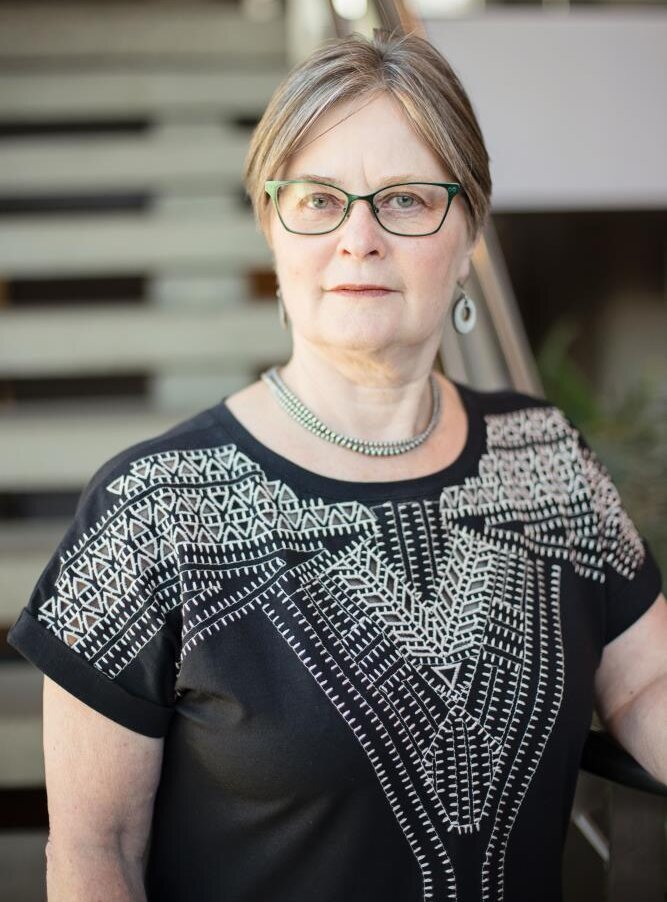
Leading with vision: Faith Davis on research, leadership and building a national brain tumour community
When Dr. Faith Davis began working in cancer research, she didn’t expect it would shape the rest of her career or lead her to serve as board chair for Brain Tumour Foundation of Canada. Then, a single discovery early in her career changed everything.
While completing graduate work in epidemiology, Faith analyzed historical medical records from thousands of tuberculosis patients who had undergone chest radiation treatments. As she reviewed the data, she noticed a pattern of increased brain tumours.
When she began verifying the diagnoses, however, she encountered a problem.
“The classification and diagnosis of brain tumours was a mess,” Faith recalls. “I couldn’t tell a primary tumour from a metastatic tumour, or a malignant tumour from a benign tumour. The data simply wasn’t reliable.”
That realization sparked a career-long commitment to improving how brain tumours are tracked and understood.
Building the data that drives research
Faith was later contacted by the American Brain Tumor Association with an ambitious request to help build the first brain tumour registry in the United States.
“They told me the data was poor,” she says. “And I said, ‘Yes, that’s why I’m concerned about it.’ And they said, ‘That’s exactly why we need your help.’”
Faith accepted the challenge, leading the development of a national brain tumour registry that helped improve how researchers understand tumour patterns, survival rates and outcomes.
Years later, after returning home to Alberta and joining the University of Alberta, Faith thought her work in brain tumour research might be behind her.
Instead, another opportunity arrived.
Within months of her return to Canada, Brain Tumour Foundation of Canada contacted her to discuss developing a Canadian brain tumour registry.
“I thought it would be easier here,” she says with a laugh. “Canada has universal health care and cancer registries in every province. I thought it would be straightforward. I was wrong.”
Still, the work moved forward. Through pilot projects and collaboration with provinces, the registry began to take shape and eventually incorporated data from nearly every region in Canada.
Today, the Brain Tumour Surveillance Research Collaborative, formerly known as the Brain Tumour Registry of Canada, brings together data from across the country to help strengthen brain tumour research and care in Canada.
“It gives Canada-specific data,” Faith explains. “That helps physicians, researchers and policymakers to make evidence-based decisions rather than relying on data from other countries.”
A commitment to giving back
Faith officially joined the board of directors for Brain Tumour Foundation of Canada in 2019 after retiring from her academic career.
For her, the decision was simple.
“The organization had funded some of my research earlier,” she says. “Serving on the board felt like a way of giving back.”
Her experience in epidemiology, research and governance made her a natural leader and she eventually stepped into the role of board chair.
While many volunteers come to the organization because of a personal connection to brain tumours, Faith’s path was shaped primarily by her professional experience and belief in the organization’s mission.
“I really respected the breadth of the work being done,” she says. “There were programs and services for patients and families, advocacy work and research initiatives. It’s a resource not just for physicians but for families and patients as well.”
Guiding the organization toward a national vision
Looking back on her time as board chair, Faith believes one of the most significant achievements has been helping guide the organization through an important transition.
“I think the biggest milestone has been moving from a smaller, London-centric organization to a truly national organization,” she says.
That shift is still underway, but it represents an important step toward ensuring every Canadian affected by a brain tumour can access support, advocacy and information no matter where they live.
“It’s about reaching people across the country,” she says. “That includes people in rural areas or communities that may not have access to in-person programs.”
Faith also highlights the strengthening of the organization’s governance and leadership during her tenure.
As she prepares to step down as chair, she believes the board is well positioned to guide the organization into its next chapter.
“I feel I’m leaving a more diverse and experienced board and look forward to watching the organization flourish under their leadership,” Faith says.
The power of women’s leadership
As Brain Tumour Foundation of Canada marks International Women’s Day, Faith also reflects on the role women play in shaping nonprofit organizations.
“If it wasn’t for women, you wouldn’t have many of the nonprofit organizations that exist today,” she says. “Women drive so much of this work.”
She believes volunteer roles can be powerful opportunities for women to grow as leaders and expand their influence.
“Volunteering can broaden your skills, your experience and your perspective,” she says. “The key is finding a role that aligns with what you care about and what you want to accomplish.”
But for Faith, leadership isn’t something women necessarily set out to pursue. Often, it emerges naturally.
“I’m not sure women look for leadership,” she says. “Leadership comes to them when they’re engaged in work that matters and contributing toward a shared vision.”
Looking toward the future
After decades of work in research, advocacy and governance, Faith remains passionate about the mission of Brain Tumour Foundation of Canada.
She believes the organization plays a critical role in connecting the brain tumour community and advancing progress in Canada.
“Research funding is always tight,” she says. “Advocacy is essential. Organizations like Brain Tumour Foundation of Canada help keep the community together and focused on common priorities.”
And while she is stepping down from her leadership role, she remains excited about what comes next.
“I think the organization is at a stage where it can really mature into the national vision that has been laid out for it,” she says.
For Faith, that vision has always been clear: a strong national community working together to support patients, families and the research that will one day change the future of brain tumours.