Get Involved
There are so many ways you can help make a difference in the lives of patients and families today.
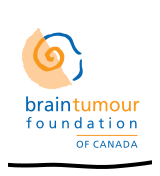

 Brain tumours, fatigue and what you can do about it
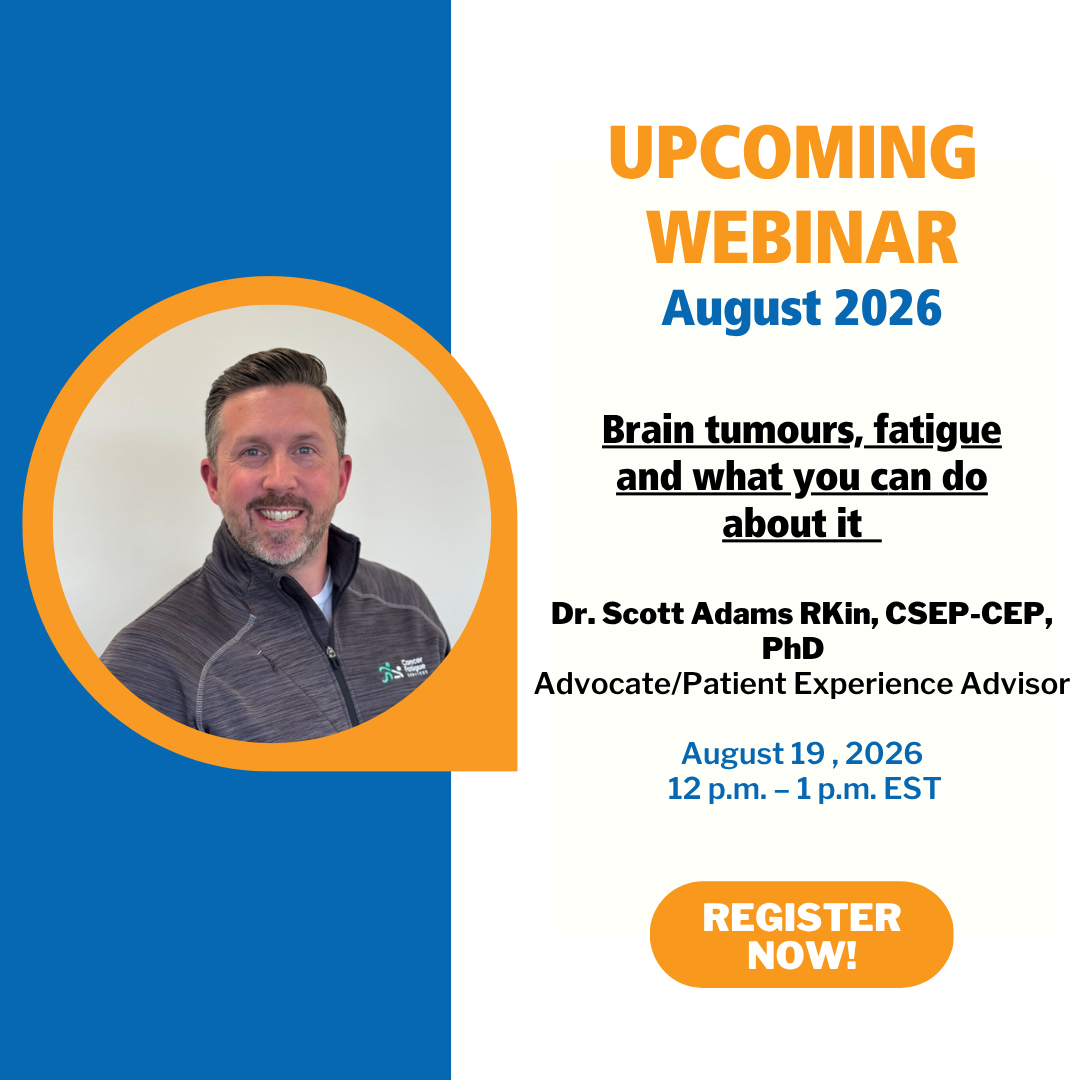
Presented by: Dr. Scott Adams RKin, CSEP-CEP, PhD
Date: Wednesday, August 19, 2026
Time: 12 p.m. to 1 p.m. EST
For people living with a brain tumour, fatigue is one of the most common and debilitating symptoms they face, yet it is too often dismissed as ordinary tiredness or an unavoidable cost of treatment. Every person living with and after a brain tumour diagnosis deserves to reclaim their energy and their life. This conversation, brought to you by the Brain Tumour Foundation of Canada, will help you understand three things: why cancer-related fatigue is real, common, and not normal; what makes it different from everyday tiredness and what drives it in the brain tumour population specifically; and what actually works to treat it, including where to find the right support. Cancer-related fatigue is complex and unpredictable, but it is treatable, and you are neither alone nor stuck.
Learning objectives:
At the end of this session, participants will:
About the speaker:
Dr. Scott Adams is a physiologist and scientist with >18 years of experience delivering and testing the effects of exercise-based interventions in people living with and after cancer. Prior to founding Cancer Fatigue Services, Scott was a scientist at the University Health Network and the inaugural co-chair of the Cardio-Oncology Rehabilitation & Exercise working group of the International Cardio-Oncology Society. He completed his PhD at the University of Alberta (Edmonton, Alberta) and two postdoctoral fellowships at Memorial Sloan Kettering Cancer Center (New York, New York) and the University of Toronto (Toronto, Ontario). His research focused on understanding how to predict, identify, minimize, and treat some of the most common and debilitating side effects of cancer treatments like fatigue, and its major causes like cardiovascular dysfunction, skeletal muscle injuries and emotional distress. As a clinician and scientist, he has witnessed the power of exercise-based multi-disciplinary interventions to transform lives and restore hope for people living with and after cancer.