Collaborative Grants
Since 2005, Brain Tumour Foundation of Canada has partnered with the Brain Tumor Funders’ Collaborative to extend the impact of research dollars.
Four North American funding organizations make up the Brain Tumor Funders’ Collaborative as core members and other partners participate when aligned with their organizations. All partnered organizations are non-profit, philanthropic and advocacy organizations from the United States. By working together we can accelerate progress in brain tumor research.
The core members of the Brain Tumor Funders’ Collaborative are:
- American Brain Tumor Association
- Brain Tumour Foundation of Canada
- Pediatric Brain Tumor Foundation
- National Brain Tumor Society
2025 RFP: Liquid Biopsy for Primary Brain Tumors
Lead Institution: Connecticut Children’s Medical Center
Project Title: Global Alliance to Establish a CSF-based Liquid Biopsy Platform for Brain Tumors
Project Leader: Ching Lau, MD, PhD
Lead Institution: St. Jude Children’s Research Hospital
Project Title: Maximizing Detection of Childhood Brain Tumors in Biofluids Project Leader: Paul Northcott, PhD
Project Leader: Paul Northcott, PhD
Read the press release:
2018 RFP: Immunotherapy for Primary Human Brain Tumors
Project Sponsor: David Geffen School of Medicine at UCLA
Project Title: Active vaccination and the timing of checkpoint blockade dictate effective immunotherapy for glioblastoma
Project Manager: Robert Prins
Project Sponsor: McGill University
Project Title: Harnessing the brain tumor immune-microenvironment to enhance therapeutic efficacy
Project Manager: Daniela Quail
Project Sponsor: UPMC Children’s Hospital of Pittsburgh
Project Title: Interrogating anti-tumor T-cells To develop adoptive cell transfer (ACT) Immunotherapy for pediatric high-grade gliomas
Project Manager: Gary Kohanbash
Sponsoring Institution: University of California, San Francisco
Project Title: Three dimensional immuno-genomics approach to personalized neoantigen-based immunotherapy
Project Manager: Joseph Costello
Read the press release:
2013 RFP: Comprehensive Evaluation of Long-term Survivors of GBM
Dana-Farber Cancer Institute in support of European Organisation for Research and Treatment of Cancer (EORTC)
Project Managers: Michael Weller, M.D. and Co-PM: Patrick Yung Wen, M.D.
“Molecular genetic host-derived and clinical determinants of long-term survival in glioblastoma”
Year: 2014
Amount: $2,000,000 over 2 years
Read the press release:
2009 RFP: New Approaches for Developing Tools for Non-Invasive or Minimally-Invasive Monitoring of Pediatric and Adult Gliomas
Children’s Hospital Boston
Investigator: Edward R. Smith
Urinary Biomarkers for Non-invasive Assessment of Therapeutic Efficacy in Glioma
Emory University School of Medicine
Investigator: Erwin G. Van Meir
Development of Protein Arrays for the Detection of Biomarkers in the CSF of Brain Tumor Patients
Johns Hopkins University
Investigator: Jaishri O. Blakeley
Amide Proton Transfer MR Imaging to Assess Tumor Response in Patients with Gliomas
Johns Hopkins University
Investigator: Luis A. Diaz
Circulating Tumor DNA as a Dynamic Biomarker in Malignant Gliomas
Johns Hopkins University
Investigator: Alena Hoská
Non-invasive Assessment of Glutamate in Glioblastoma Multiforme: Effect of Treatment
Massachusetts General Hospital
Investigator: Bob S. Carter
Exosome Analysis: A Non-Invasive Approach to Monitor Treatment Responses in Glioma Patients
Memorial Sloan-Kettering Cancer Center
Investigator: Andrew B. Lassman
Molecular Determinants of [18F]FACBC-PET Imaging in Brain Tumors
University of California (David Geffen School of Medicine at UCLA)
Investigator: Whitney B. Pope
Combining Genomics with Physiologic Imaging Biomarkers to Predict and Follow Treatment Response in Glioma
University of Texas MD Anderson Cancer Center
Investigator: Kenneth D. Aldape
A combined molecular and clinical predictor of progression vs. pseudoprogression in newly diagnosed GBM.
University of Washington
Investigator: Kristin R. Swanson
Patient-specific Metrics of Treatment Response
Vanderbilt University Medical Center
Investigator: Kyle D. Weaver
Monitoring Response to Therapy in Malignant Glioma Patients Using Blood-Based Epigenomic and Proteomic Biomarkers
Read the press release:
2005 RFP: New Mechanisms for Preclinical Development and Testing of Agents for Glial Tumors
Kennedy- Krieger Institut
Dr. John J. Laterra
Tumor Stem Cell-Based Drug Discovery for Adult and Pediatric Glioma
Pre-clinical models of malignant brain tumors remain important in the identification of anti-cancer compounds. Unfortunately, the cell culture and animal models currently used for drug discovery have deficiencies that limit their ability to predict therapeutic responses in patients. A potentially critical explanation for this deficiency is that past models inadequately address possibility that a small subpopulation of glioma cancer cells with stem cell-like properties (i.e. glioma cancer stem cells) may generate the bulk of cancer cells within each tumor. This emerging concept predicts that therapies will fail if they do not specifically target the cancer stem cells and stem cell-driven tumor recurrence. The hypothesis of this 3-year research program is that stem cell-like cancer cells in glioma are a necessary and specific primary target for therapeutic intervention. We propose to pursue this hypothesis, looking at both adult and pediatric gliomas, with a new collaborative network of scientists and clinicians from four academic institutions within the United States and Italy who are experts in the fields of basic stem cell biology, cancer biology, molecular genetics, neuropathology, neuro-oncology, neurosurgery, neuroradiology, experimental therapeutics, and clinical trial design.
David Geffen School of Medicine at UCLA
Investigator: Dr. Paul Mischel
Molecularly Guided Clinical Trials for Glioma
Malignant glioma is a disease with great genetic complexity. The traditional research approach of analyzing individual genes or proteins in isolation has yielded few breakthroughs; a paradigm shift is needed. Diverse types of high dimensional molecular (and clinical) data must be integrated to identify effective combinations of therapeutic agents and novel drug targets. We hypothesize that a systems level integration will facilitate the development and testing of new glioma treatments. The recent finding of the critical role for molecular interactions in determining response to EGFR kinase inhibitors highlights this point. Efficient translation using dynamic models and the design of prospective “smart” clinical trials will require a new type of team. The assembled team, with complementary expertise, diverse perspectives, a range of clinical populations (both adult and pediatric gliomas) and a history of successful collaboration should facilitate the development of innovative new treatments for malignant glioma patients. The focus will be on using an integrated systems approach to accelerate discovery, biologic modeling, and clinical application of novel molecular therapeutic targets in malignant glioma.
Radiation Therapy Oncology Group
Investigator: Dr. Minesh Mehta
Identifying and Overcoming Resistance Mechanisms in Glioblastomas: A Joint EORTC-RTOG Effort
Currently available treatments for glioblastoma can prolong survival in some patients, but are rarely curative. Fundamentally new approaches are required to uncover biological mechanisms of resistance from which novel therapeutic strategies can be developed. As glioblastomas are relatively uncommon tumors, there is only a limited ability of single institutions to conduct studies with adequate power to address these issues. Accordingly, the Radiation Therapy Oncology Group (RTOG) and European Organization for Research and Treatment of Cancer (EORTC) have joined forces in initiating the largest clinical study to date for newly-diagnosed glioblastomas. The required submission of tissue specimens within this carefully managed clinical trial system will create unparalleled translational research resources with enormous potential to uncover mechanisms of therapeutic resistance in glioblastomas. The BTFC is supporting the research component, a valuable leveraging of the unprecedented clinical trial infrastructure. The working hypothesis of the team is that designing more effective therapeutic strategies for glioblastoma patients will be optimized via a pharmacogenomic/pharmacoproteomic approach. Mechanisms of resistance identified through molecular and genetic profiling of large numbers of prospectively-collected clinical specimens will be hopefully lead to the development of targeted therapy strategies to overcome observed mechanisms of glioma resistance.
Read the press release:
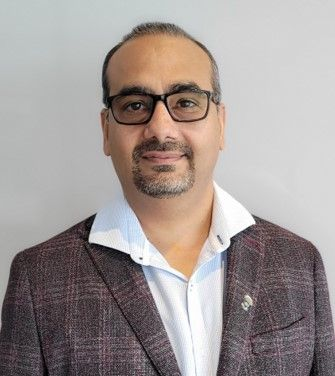 Nehalkumar Thakor, PhD at the University of Lethbridge