Dr. Deepak Dinakaran – 2025 Feature Grant Recipient
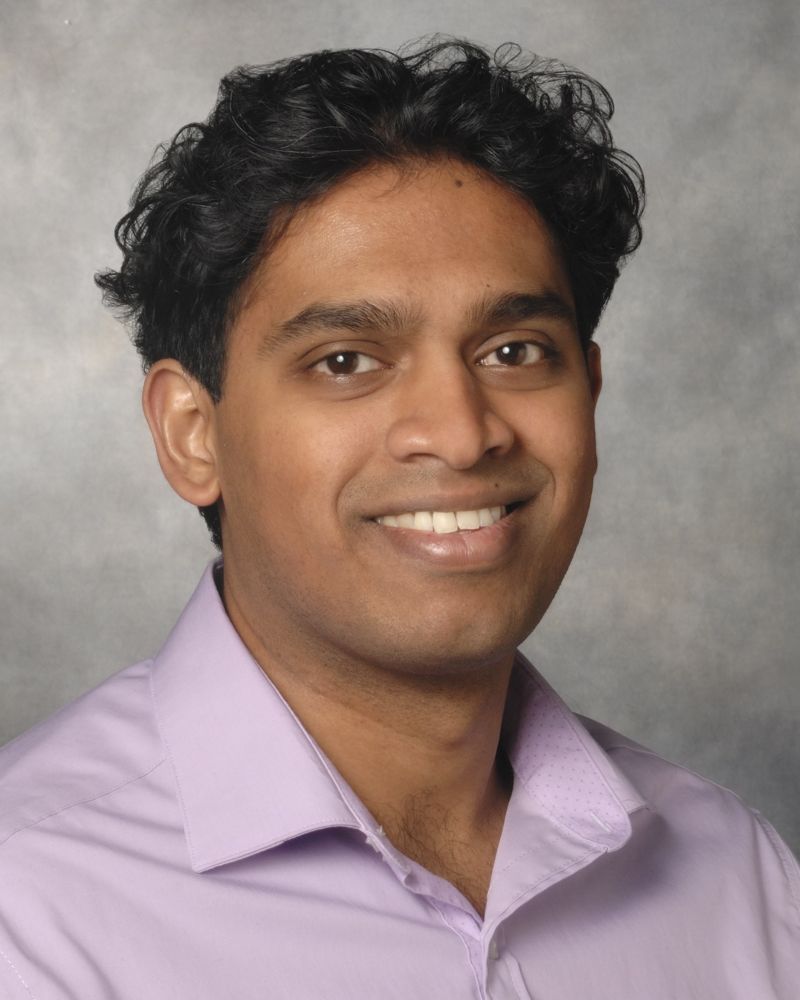 Clinician Scientist, Radiation Oncologist, Sunnybrook Health Sciences Centre
Generously funded by DUNN with Cancer
Project title: “RadioPDT-triggered nanoparticle release of Temozolomide in Glioblastoma Therapy”
Description of the project:
Glioblastoma (GBM) is a devastating, fatal tumour that is treatable, but not curable. After surgery establishes the diagnosis, it is mainly managed with chemotherapy and radiotherapy to preserve quality of life and extend survival. Radiotherapy is an effective treatment to slow progression, but the amount of radiation dose given is limited by the toxicities. Chemotherapy with temozolomide (TMZ) increases this benefit by approximately 3 months of additional survival.
We recently discovered a way to enhance TMZ’s effectiveness with nanoparticle-based on-demand drug release. TMZ is safely encapsulated within the nanoparticle, travels to the tumour, and rapidly releases the drug on command upon exposure to radiation. This project will evaluate the effectiveness of this drug delivery mechanism in increasing therapeutic efficacy by using advanced microscopy to detect drug release in GBM cells, to stop or delay tumour growth in preclinical models, and to assess the reduction in toxic effects on normal organs.
The impact of this novel nanoparticle delivery mechanism is that it leverages the radiation already being delivered to significantly enhance chemotherapy’s effectiveness in treating GBM. Thanks to the funds from Brain Tumour Foundation of Canada’s Feature Grant, we can explore this novel drug release mechanism that could enhance the effect of theoretically any drug. Success in these studies can lead to first-in-human trials in Sunnybrook’s Odette Cancer Centre.
Impact of receiving the award:
I would like to thank Brain Tumour Foundation of Canada and the Dunn with Cancer fund for supporting my work on using nanoparticles and radiation to treat glioblastoma more effectively. Over the last 13 years, I have had the privilege to participate in the care of GBM patients. The standard-of-care treatments I provide are usually effective, but I have always found the outcome unacceptable. I draw motivation from my patients to conduct innovative research that will meaningfully impact this outcome. As an early-career researcher with a bold, innovative idea, I find that securing funding for research that does not conform to contemporary cancer research themes can be quite challenging. Yet, GBM is not a disease that has benefited from contemporary thinking for the last 20 years. That is why I greatly appreciate this grant, as it provides an excellent launch for my efforts to bring novel, potentially high-impact treatments that GBM patients need. Throughout my career, I aim to be part of the change that transforms GBM from a deadly, devastating disease to one that we can overcome.
Midpoint Report- September 2026
In the last year we have optimized the chemotherapy-carrying selective release nanoparticle for drug loading. We completed in-vitro experiments in one glioblastoma cell line, and are repeating the experiments in a second line to verify the results are reproducible. We are completing the initial in-vivo studies anticipated to complete in the second year of the grant.