Dr. Stephen Yip – 2026 Feature Grant Recipient
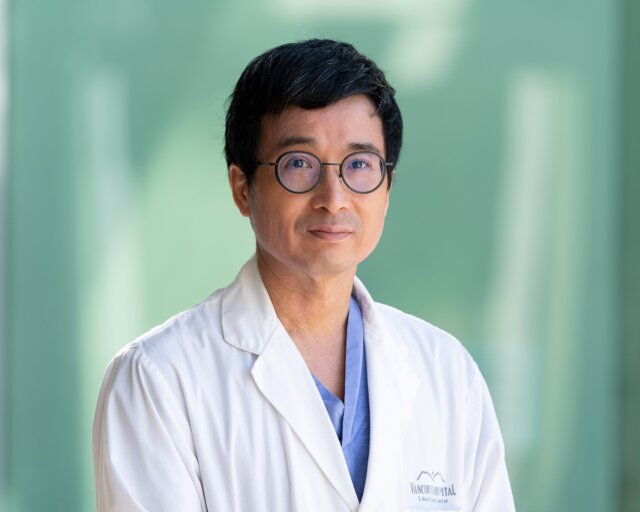 Neuropathologist and Molecular Pathologist, Vancouver General Hospital
Generously funded by DUNN with Cancer
Total awarded amount: $50,000
Project title: “Precision Without Delay: Leveraging Advanced Genomic Approaches for Rapid Glioblastoma Diagnosis”
Dr. Stephen Yip is a staff neuropathologist at Vancouver General Hospital and medical director of Clinical Cancer Genomics at BC Cancer, responsible for all cancer-related germline and somatic molecular testing in the province of British Columbia. He completed his combined M.D.-Ph.D. training, followed by 4 years of neurosurgical training, at the University of British Columbia. He switched to neuropathology and obtained his Royal College certification, followed by fellowship training at the Massachusetts General Hospital under the mentorship of Dr. David Louis and Dr. A John Iafrate.
Description of the project:
Glioblastoma is an aggressive brain tumour that requires rapid and accurate diagnosis based on genetic information to guide treatment decisions. However, current genetic testing methods often require multiple separate laboratory tests and can take several weeks to provide a complete molecular diagnosis. During this time, important decisions are often made using limited information. This challenge is especially significant when patients travel to large cities in Canada for surgery and specialized care only to return home before a complete molecular-informed treatment plan is finalized.
This study will evaluate an emerging technology called long-read sequencing (LRS), which can rapidly analyze DNA and methylation patterns present in a tumour using a single test. With advanced informatics tools, this approach may enable accurate molecular classification of glioblastoma and detection of key genetic changes within just 1-2 days following surgery.
In parallel, other advanced diagnostic tests such as optical genome mapping (OGM) will be performed to complement the comprehensive diagnostic assessment and ensure the accuracy of this new technology. By improving the speed and comprehensiveness of testing, this project aims to provide timely access to critical diagnostic information, support more informed treatment planning, and strengthen precision brain tumour care.
As the applicant and principal investigator, he brings a wealth of expertise in neuropathology, neuro-oncology and molecular genomics, with an established national profile in translational cancer genomics and the implementation of advanced molecular diagnostics in clinical practice. His work focuses on the clinical integration of comprehensive genomic technologies in precision oncology workflows, supported by a strong record of peer-reviewed publications and competitive grant funding.
Dr. Yip will collaborate with a multidisciplinary team of specialists on this project:
- Dr. Tara Spence- Co-Applicant, Clinical genomics, test implementation and long-read sequencing
- Dr.’s. Serge Makarenko and Mostafa Fatehi, neurosurgical and neuro-oncology expertise, including provision of tissue
Impact of receiving the award:
Receiving this award is an important step toward advancing a new approach to accurately diagnosing glioblastoma (GBM) more quickly than ever before. Today, individuals presenting with a suspected diagnosis of GBM often wait several weeks following their surgery for the genetic tests needed to fully classify their tumour and guide treatment decisions. Our research will evaluate whether a single long-read sequencing test can provide this critical information within one to two days after surgery, helping to guide informed treatment decisions much earlier.
This funding will allow us to prospectively evaluate this technology in individuals undergoing surgery for suspected GBM and compare its performance with current clinical testing methods. In addition to ensuring accuracy in this approach, we will assess whether it can be successfully integrated into routine genetic testing workflows within Vancouver Coastal Health. This work has the potential to lay the foundation for a faster, more comprehensive diagnostic pathway that improves access to precision medicine for individuals with a brain tumour diagnosis. More broadly, it offers the possibility of improving care timelines for Canadians affected by GBM and establishing a framework for introducing a similar rapid genomic approach in other areas of cancer diagnostics, locally and nationally.