Lauren Westhaver – 2025 Fellowship Grant Recipient
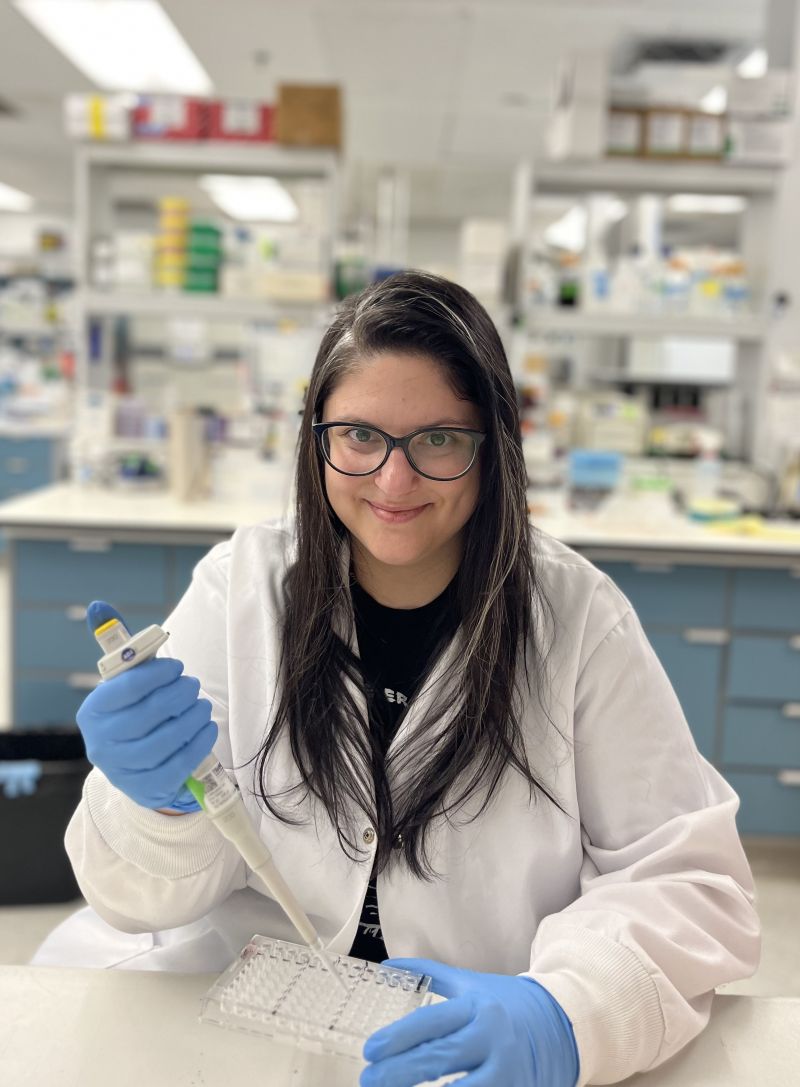 Postdoctoral Research Fellow, Dalhousie University
Generously funded by DUNN with Cancer
Supervisor: Adrienne Weeks, Neurosurgeon, Dalhousie University
Project title: “Immunophenotyping of primary tumour tissue and longitudinal peripheral blood mononuclear cells from patients with glioblastoma to distinguish pseudoprogression from true progression”
Description of the project:
Glioblastoma (GBM) is the most common and aggressive primary brain cancer, with a survival time of only months despite aggressive treatment. Following treatment, patients undergo repeated MRI scans to monitor tumour progression. However, some patients may have MRI results that appear to indicate tumour growth, but this is a reaction of the treatment and immune system to the tumour; this is known as pseudoprogression. This leads to uncertainty that often delays clinical decisions for several months, negatively affecting care and patient quality of life. To address this challenge, the Weeks and Roy laboratories have established the largest longitudinal blood collection for brain tumour patients in Atlantic Canada. This cohort will enable the study of how the immune system in patients’ blood responds to GBM and treatment. By analyzing immune system changes in patient blood during treatment, we aim to identify markers that distinguish true tumour progression from pseudoprogression. Understanding changes in immune system profiles in patients undergoing treatment for GBM is crucial for enhancing diagnostic accuracy and reducing delays in care, ultimately improving the quality of life for patients with GBM.
Impact of receiving the award:
Being awarded the DUNN with Cancer Brain Tumour Research Fellowship means that I can pursue high-impact research aimed at improving the quality of life for individuals facing glioblastoma, an aggressive and devastating brain cancer. This fellowship offers the opportunity to use immune profiling to distinguish true cancer progression from pseudoprogression, ultimately leading to the development of less invasive and more reliable tools for disease monitoring.
This fellowship is a tremendous honour and furthers my commitment to translational research that bridges the gap between discovery and patient care. As a Postdoctoral Fellow, I am grateful for this generous support, which provides me with the opportunity to explore innovative strategies and build collaborative networks that can accelerate impact.
I am deeply grateful to the donors of the DUNN with Cancer Brain Tumour Research Fellowship for investing in early-career researchers like me. Your generosity is not only advancing the research of glioblastoma – it is inspiring a new generation of investigators committed to making a difference for patients and families affected by glioblastoma.
Midpoint Update – June 2026
Over the past year, we have continued to collect blood and tumour samples from patients with glioblastoma and have successfully analyzed immune cells from more than 125 samples, including those collected before surgery and during follow-up. We have also compared these samples with those from healthy individuals and patients with non-glioblastoma brain tumours.
Our early findings show that specific immune cell patterns in the blood can distinguish patients with glioblastoma from healthy individuals and may help differentiate true tumour progression from pseudoprogression. We have also found immune signals present at diagnosis that may be associated with longer survival. We are currently preparing our results for publication.
Over the next year, we will continue enrolling patients in our study and collecting additional samples to validate these findings. Our goal is to develop blood-based immune biomarkers to help health care teams make faster, more accurate treatment decisions, ultimately improving care and quality of life for people living with glioblastoma.