
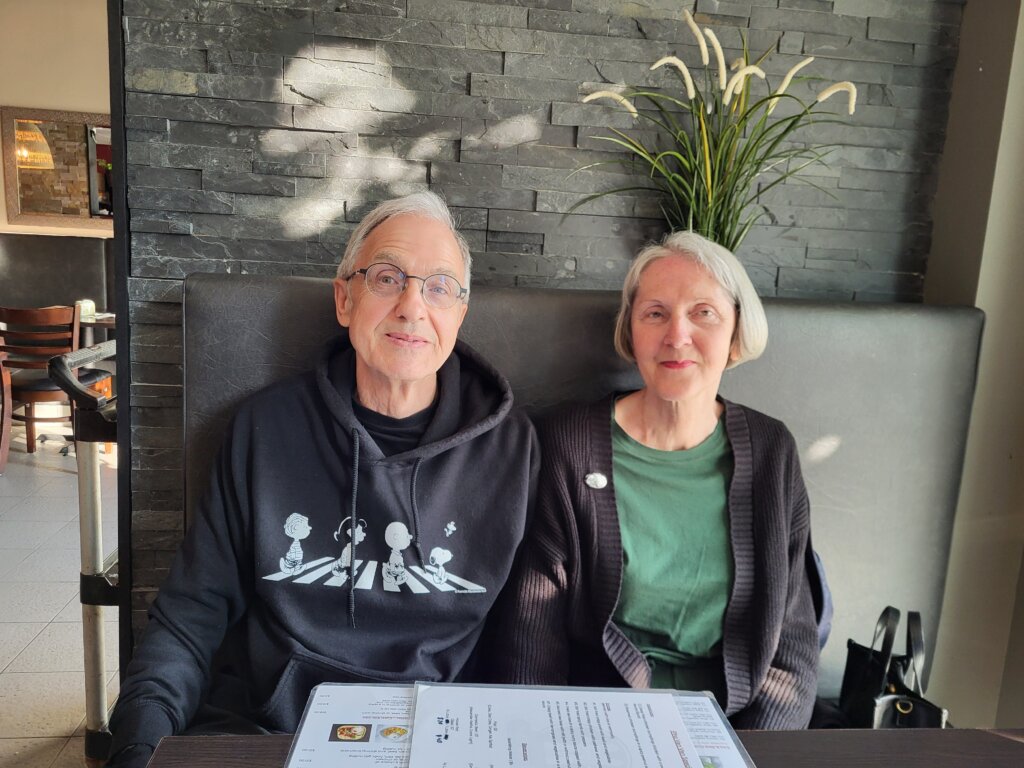
Caring for Anne: A husband’s journey through glioblastoma
From the moment Robert McBryde picks up the phone, there’s a flurry of activity in the background.
As one person leaves, another arrives to check in on Robert’s wife, Anne. Robert informs his wife and then directs the new visitor, a nurse, to a binder that tracks Anne’s medical needs.
“I’ll leave it in your very capable hands,” Robert says to the nurse, before turning to our conversation. “Ask me anything you’d like.”
Despite being pulled in all directions, Robert is warm and friendly. It’s been a whirlwind of a year for him and his family, after Anne was diagnosed with glioblastoma in May 2025 at age 66.
Anne’s diagnosis
 “There were some red flags, with her saying bizarre things,” Robert says, “but it certainly didn’t point to a brain issue. And then, she fell on May 8, and we walked from our house to the hospital. She was still able to walk and she was perfectly lucid.”
Anne had an MRI that detected her brain tumour, with her surgery taking place only four days later.
“The operation was a success, or so we thought,” Robert says. “She was doing okay for about three weeks, and then she started chemotherapy and radiation. It really devastated her, physically and cognitively.”
Anne’s family made the difficult decision for her to receive palliative care, keeping Anne comfortable at home.
“She’s mostly nonverbal now,” Robert says. “Her mobility has declined quite a bit, too.”
Still, Robert says, she’s “very cheerful and sweet.”
Family ties
Born in what was then Czechoslovakia, Anne came to Vancouver at 10 years old. From there, she moved to Québec City, where she and Robert met. They built their lives in Québec City over 35 years, welcoming two sons, while later moving to Montreal and spending time in France.
Anne and Robert relocated to Ottawa in early 2024, with Anne participating in their family translation business until her diagnosis. Now, the business is run by Robert and one of the couple’s sons.
Becoming a caregiver
Robert is also a published author and blogger, taking solace in writing as he manages his caregiving responsibilities.
 “It’s been therapeutic,” he says. “I would encourage anyone in a similar situation to find an outlet. If not writing, maybe drawing or recounting stories to others—finding some way to express yourself.”
Robert, who’s managed with bouts of Bell’s palsy due to stress, has seen the condition return since Anne’s diagnosis. Along with trouble sleeping and physical pain, he’s had his own struggles since becoming a caregiver.
“It’s certainly a huge challenge,” he says. “It’s something I’ve never confronted before.”
He mentions the grief he’s experienced too, for the life he and Anne once had together and not knowing what the future holds. He’s thankful for the support he’s received, though, particularly during a time when he didn’t know where to turn.
“When she was diagnosed, I was all on my own—cooking and cleaning and looking after her,” he says. “I’d tell anyone in my position to make sure you avail yourself of all the assistance your community provides. I’ve hired a cleaner. I have personal support workers and nurses coming by and they help me and Anne.”
Moments to be grateful for
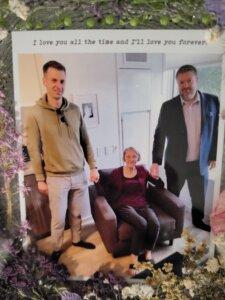 The extra help allows Robert more time to be with Anne.
“We would walk a lot together until recently,” he says. “She was memorizing poetry and reading voraciously. Now, she spends time colouring, or I’ll read to her or watch a show with her.”
Through the challenges, Robert considers himself fortunate.
“Anne’s spirits are good and she’s smiling,” Robert says. “There’s no magic solution to any of this. We’re dealing the best that we can.”