
Inspired by generosity
Donors and patients are making tomorrow’s discoveries possible.
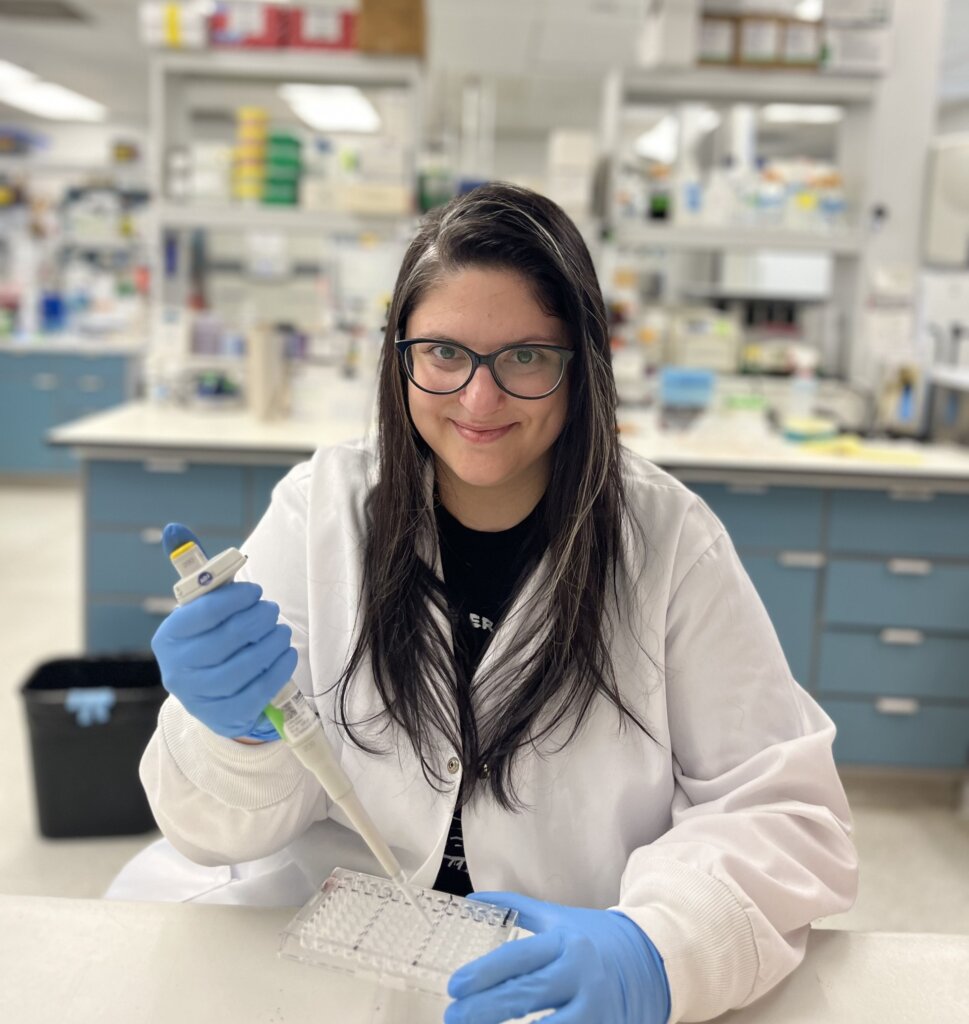
Every day, Lauren Westhaver, PhD, is reminded that behind every scientific discovery is a person willing to help others.
People living with glioblastoma volunteer blood samples and their time to help researchers better understand one of the most aggressive forms of brain cancer, even knowing the discoveries may not benefit them directly.
“What drives me is the fact that these people who are going through the most difficult thing they will ever go through in their lives are willing to donate their time and energy to our study. That always amazes me.” — Lauren Westhave
As a postdoctoral researcher at Dalhousie University who is supervised by Dr. Adrienne Weeks and Dr. Jeremy Roy, of New Brunswick Institute of Health Research, Westhaver is working to solve one of the biggest challenges in glioblastoma care.
After treatment, MRI scans can sometimes appear to show tumour growth when the changes are caused by the body’s response to treatment—a phenomenon known as pseudo progression.
Because there is no definitive test to tell the difference, patients and their loved ones can spend months waiting for answers. Westhaver hopes her research will help develop a blood test that distinguishes true tumour progression from pseudo progression, giving patients and clinicians greater confidence in treatment decisions while reducing unnecessary uncertainty.
Supported by a Brain Tumour Research Fellowship and an Elevation Grant (now known as the Allison Dunn Elevation Grant in GBM Research), which is funded through the annual DUNN with Cancer event, Westhaver is helping advance research that could improve care for future patients. The fellowship provides salary support, while donor-fundedresearch grants make the work in the laboratory possible.
“Their support directly funds this work, and we’re incredibly grateful,” Westhaver says.
For Westhaver, every breakthrough begins with generosity, from the people who volunteer for research to the donors who make that work possible. That generosity is helping move discoveries from the laboratory toward better care, bringing new hope to everyone affected by brain tumours.