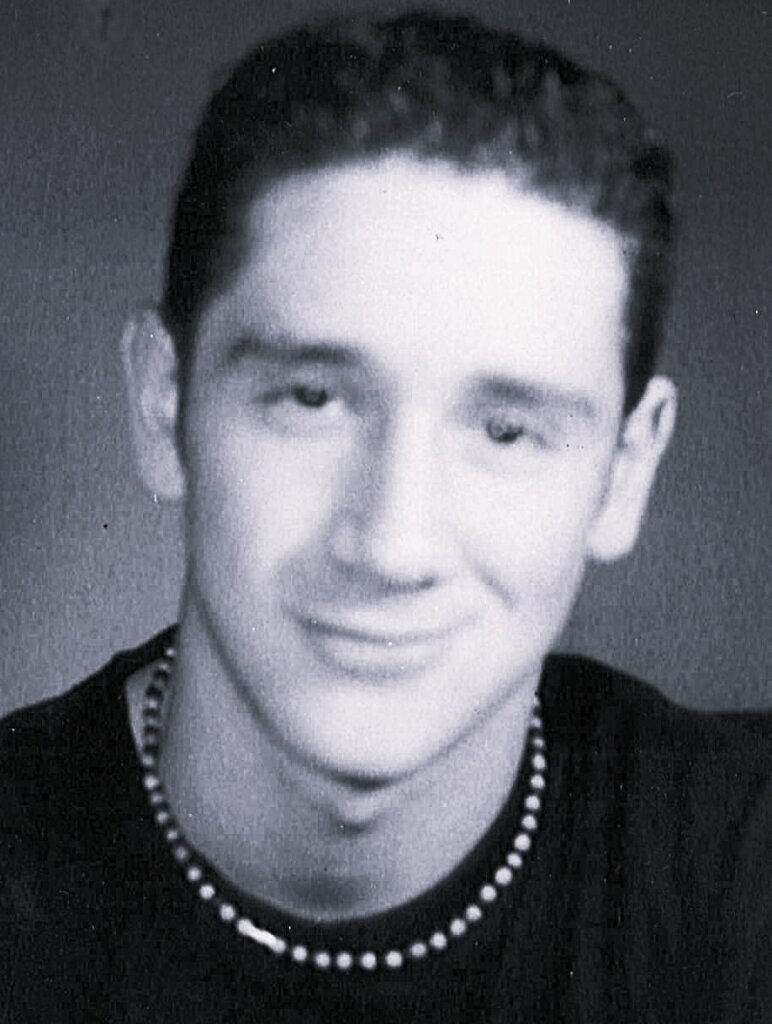
Remembering David Bloom and the legacy he left behind, 25 years later
Some people have a way of drawing others in. For David Bloom, that seemed to happen almost without trying.
“He loved people and people loved him,” his dad, Lawrie, remembers. David was a singer, dancer and actor, but Lawrie and his wife, Charron, say his greatest gift may have had less to do with the stage than with the way he made other people feel.
“People seemed to gravitate towards him,” Lawrie says. “He helped people feel important. He helped people find themselves.”
“I think that was his main talent,” Charron says. “From a young age, he was always making sure everybody else around him was happy.”
Twenty-five years after David died from a brain tumour at just 19 years old, that instinct to bring people together is still at the heart of his legacy. It lives on through fundraising, scholarships and awards created in his name, and through Brain Tumour Foundation of Canada’s BrainWAVE program, which gives children affected by brain tumours and their families a chance to connect, have fun and spend some time away from the routines of treatment and hospitals.
For Lawrie and Charron, it feels like a fitting continuation of the person David had always been.
“That’s the kind of person David was,” Charron says. “Helping these youth and these younger people dealing with this situation would have been him.”
The kid everyone remembered 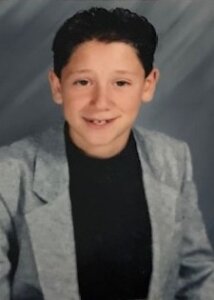
David was the youngest of Lawrie and Charron’s three sons, and from an early age, there was something about him that people noticed.
As a little boy, he smiled so often that an uncle nicknamed him “Happy Smiley.” Lawrie says that smile stayed with him “right to the end.”
He was bright, outgoing and endlessly curious. His brother, Richard, nicknamed him “the Best,” and teachers recognized early that there was something special about him.
It didn’t take long for the performing arts to become a major part of his life.
David acted, sang, danced and played music. He had perfect pitch and could sit down at a piano and reproduce a tune even though he had never had a lesson. Later, he began singing alongside Lawrie and other soloists at their synagogue.
“He owned songs,” Lawrie says. “The songs became his.”
David eventually took up ballet, tap and jazz, performed in musicals and joined the Mayfield School of the Arts. In Grade 9, he became the only student at his grade level to earn a part in the school musical Cabaret. He later appeared in Pippin and sang with Mayfield’s jazz group.
One of his biggest opportunities came almost by accident. A friend wanted to audition for a singing role at Canada’s Wonderland and asked David to come along. David went mostly to support him, but left with a role of his own.
“He really just went for the heck of it,” Lawrie recalls.
David ended up loving the job, and the experience eventually led to another opportunity with the Young Company of Canada at the Charlottetown Festival in Prince Edward Island.
“He loved rehearsals,” Lawrie says. “It was fun to him. ‘That’s what I do,’ he’d say.”
When everything changed 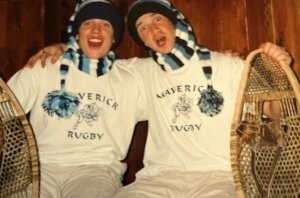
During David’s time performing in Prince Edward Island, he began experiencing severe headaches. Eventually, testing revealed an inoperable brain tumour.
The diagnosis came with an 18-month prognosis, but David was determined not to let his illness define the time he had left.
Even while receiving treatment, he continued performing.
He had earned the lead role of Billy Bigelow in Mayfield’s production of Carousel, and he refused to give it up. His routine became almost unimaginable. He attended school in the morning, travelled to Toronto for radiation treatment, then went back to school for rehearsals.
Later, as his illness progressed, he took on another role in My Fair Lady. Lawrie says David was nearly blind by that point, yet almost no one in the production knew how sick he was.
“He was that kind of kid,” Lawrie says. “‘I’m gonna do it no matter what.’”
David’s determination was striking, but his parents remember something else even more clearly. He seemed almost more concerned about how his illness was affecting everyone around him than about what was happening to him.
“We feel that he felt his role was to help his friends deal with his problem in as positive a way as possible and make them feel comfortable,” Lawrie says.
They never heard him complain. Even as his sight and health declined, friends continued visiting. David knew exactly what was happening, but rather than seeking pity, he tried to reassure them.
That instinct to make things a little easier for someone else would become part of what he left behind.
“Dad, what do you think?”
David’s connection to Brain Tumour Foundation of Canada started with a flyer.
After one of his treatments in Toronto, David and Lawrie spotted information about what was then called the Spring Sprint, a fundraising event for Brain Tumour Foundation of Canada. The family decided to take part in the Toronto event and raised $2,500.
When David and Lawrie arrived with a bag full of cash and cheques, David struck up a conversation with one of the organizers. He told her he had a brain tumour and asked a simple question. Why wasn’t there an event like this in his hometown of Brampton?
The answer was equally simple. Nobody had organized one.
David, who was taller than his dad, looked down at Lawrie.
“Dad, what do you think?”
Lawrie worked for the City of Brampton in recreation and had years of experience organizing events.
“I said, okay,” he recalls. “He said, ‘You know what to do.’”
Soon, about 20 family members and friends had volunteered to form a committee, with support from the City of Brampton and Brain Tumour Foundation of Canada. David was supposed to be an honorary leader at the first Brampton event, though he never got the chance.
David died on April 24, 2001, just days before the event was scheduled to take place. He was 19.
Turning grief into action 
There was never much question about whether the family would go ahead with the event.
David had wanted it to happen.
So, in the days immediately following his death, his family and friends poured themselves into making it a success.
“All the energy that people had to make the event a success is what made it work for all of us,” Lawrie says. “We all took the sadness and the numbness and put that into energy.”
The scale of the community’s response reflected just how many people David had touched.
His funeral drew busloads of students and teachers from Mayfield, along with colleagues of Lawrie’s from the City of Brampton, members of city council and the mayor. The funeral home told the family it had never seen such a large gathering of mourners.
Then came the Spring Sprint.
That first Brampton event raised $125,000, which at the time was the largest amount ever raised by a Spring Sprint.
What began with David spotting a flyer grew into a 12-year commitment for his family and friends.
Over those years, the Brampton event raised approximately $1.4 million for Brain Tumour Foundation of Canada through donations and sponsorships.
The event eventually became the David Bloom Memorial Spring Sprint. Lawrie also spoke at schools and community organizations about brain tumours, helping raise awareness as well as funds.
And although he is no longer on an organizing committee, Lawrie still fundraises at the annual Brain Tumour Walk.
Twenty-five years later, the connection continues.
A legacy built around young people
The Bloom family also established a legacy fund in David’s name, with donations made in his memory directed to Brain Tumour Foundation of Canada.
The David Bloom Legacy Fund has become an important supporter of BrainWAVE, Brain Tumour Foundation of Canada’s paediatric program. BrainWAVE gives children living with brain tumours and their families opportunities to do something that can be difficult during treatment, simply have fun.
Through outings and events, families get a break from appointments, treatments and hospital routines, while also meeting others who understand what they are going through.
For David’s parents, that connection feels especially meaningful.
Lawrie says the purpose was never simply about keeping David’s name visible.
“It’s important for us, not necessarily his name, but to support the other youth,” he says.
David had always been the person trying to make others comfortable, helping friends through difficult moments and bringing people together.
Supporting children facing brain tumours feels like an extension of that.
“If there’s another world,” Charron says, “then obviously he’s really happy about that.”
More than one kind of legacy
BrainWAVE is only one piece of the impact David left behind.
His family and community created scholarships, arts awards and other honours in his name, including a scholarship at Mayfield for graduating arts students and awards recognizing the qualities David was known for, including leadership, friendship, positive attitude and spirit.
But perhaps the most personal part of his legacy lives in the people who knew him.
Charron is still in touch with many of David’s friends. They are adults now, with careers and children of their own. And they still talk about him.
“They’re always contacting me, sharing their achievements and their kids’ achievements,” she says. “They always think of David.”
That may say as much about David as any fundraising total ever could.
A short life, but a full one 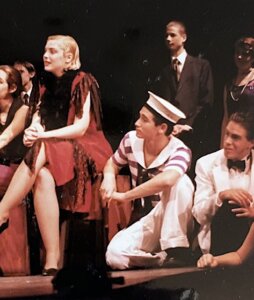
Near the end of his life, David’s friends gathered for a huge surprise party for his 19th birthday.
By then, his eyesight had deteriorated significantly. His brothers rented a karaoke machine, and David stepped up to perform one last time. He sang Frank Sinatra’s My Way, with his brother Richard helping him with the words. It would be his final performance.
His dad remembers the standing ovation and a room full of people in tears.
For Charron, though, David’s story isn’t ultimately defined by its ending.
“He had a very short life, and it’s terrible that he had such a short life, but he had a full life,” she says. “You’d hope everybody would have a life like that where you’re enjoying life so much and doing exactly what you love to do.”
When asked what they hope people remember about David now, 25 years later, his parents don’t point first to the money raised, the awards named for him or even his remarkable talent.
They talk about his warmth. His enthusiasm. His positivity.
And, as Lawrie adds, “the way he supported other people.”
Twenty-five years after his death, children and families David never had the chance to meet are still finding connection, fun and support through a program his legacy helps make possible.
For a young man who spent so much of his life making the people around him feel a little happier, it’s difficult to imagine a more fitting legacy.