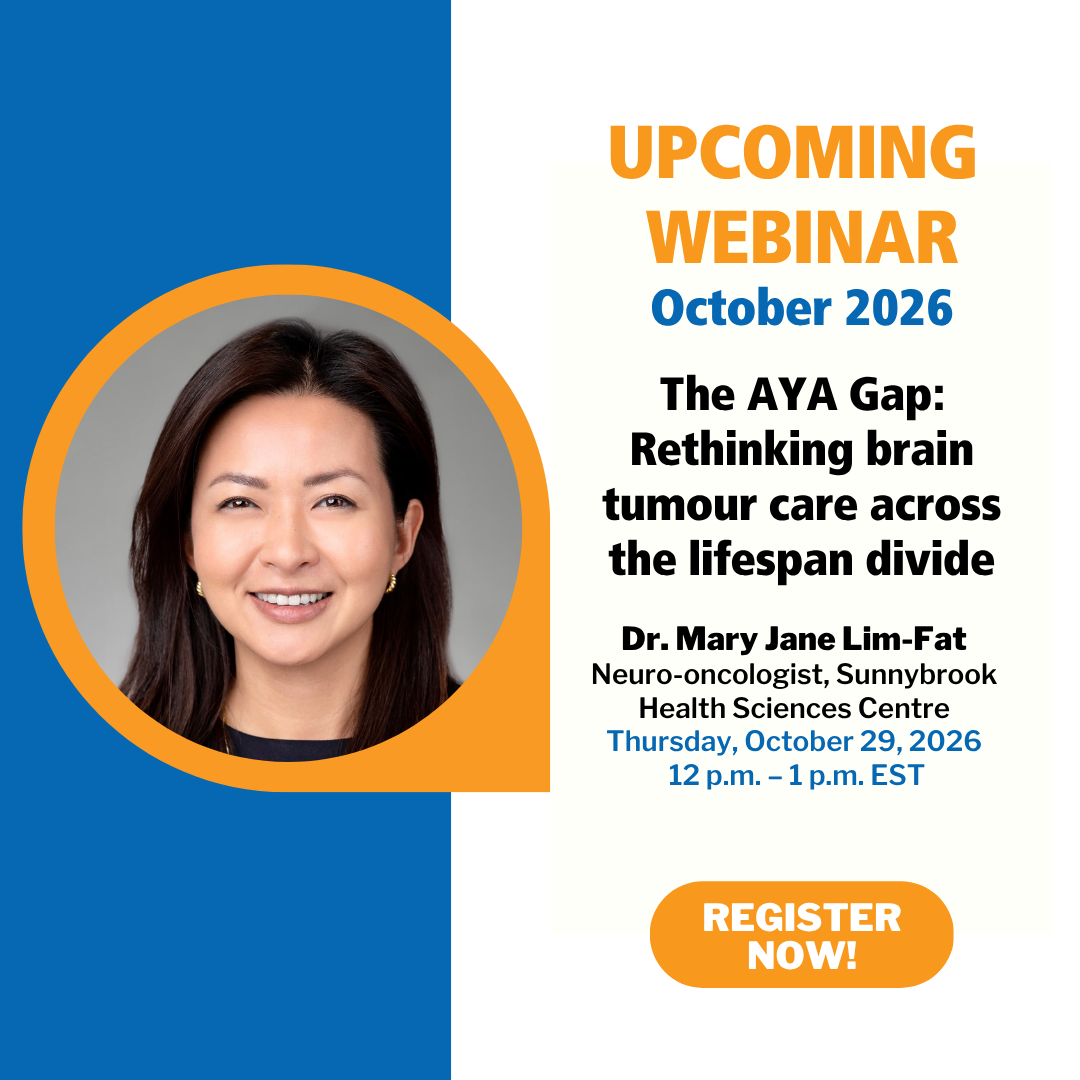
Webinar: The AYA Gap: Rethinking brain tumour care across the lifespan divide
The AYA Gap: Rethinking brain tumour care across the lifespan divide Date: October 29 2026 Time: 12pm to 1pm EST […]
Hats for Hope is here! Wear hope, raise awareness and support Canadians affected by brain tumours. Learn more.
The AYA Gap: Rethinking brain tumour care across the lifespan divide Date: October 29 2026 Time: 12pm to 1pm EST […]
Brain Tumour Support Groups allow patients, survivors, and caregivers to share their experiences and feelings in a safe and confidential environment, as well as to give and receive information or support from others going through parallel diagnoses.