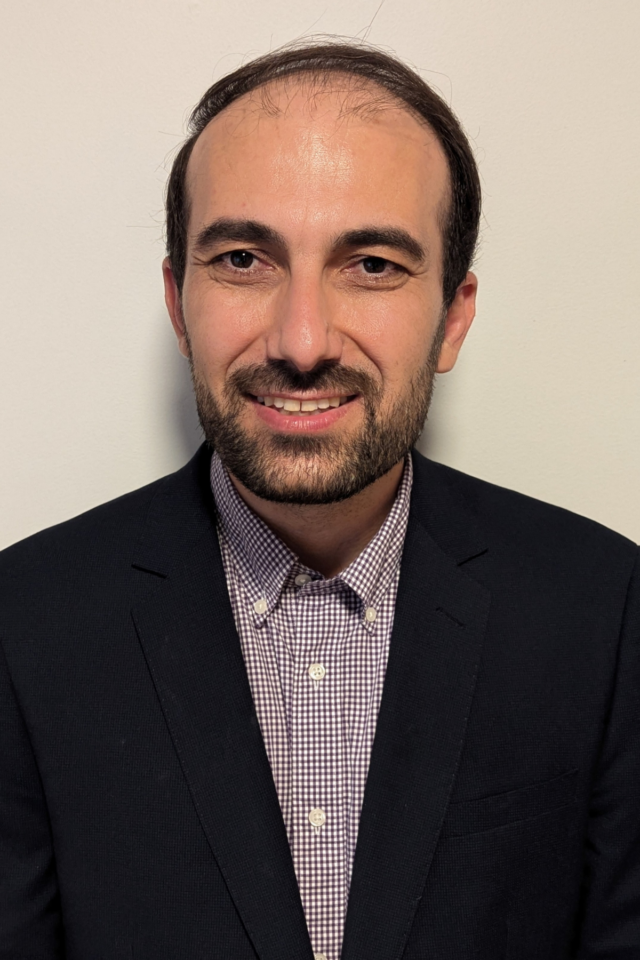
Dr. Rober Abdo – 2026 Fellowship Grant Recipient
 Department, Pathology and Laboratory Medicine, Schulich School of Medicine & Dentistry, Western University
Generously funded by DUNN with Cancer
Total awarded amount: $100,000
Project title: “Elucidating PTK7-Mediated Cancer-Brain Crosstalk as a Driver of Glioblastoma Recurrence”
Dr. Abdo is a physician-scientist who recently obtained his PhD in Pathology and Laboratory Medicine. His research focuses on spatial tumour biology and the mechanisms by which malignant cells remodel the brain microenvironment to support progression and therapy resistance.
Dr. Abdo’s long-term goal is to become an independent translational neuro-oncology investigator who bridges spatial systems biology with clinically actionable therapeutic development.
He has shared that he is driven by the unmet need in brain tumours, where recurrence remains nearly universal despite maximal therapy. He aims to define tumour-intrinsic drivers that reshape the tumor–brain ecosystem and to translate these discoveries into biomarker-guided and immune-targeted strategies.
For him, this Fellowship represents a critical transition point in his career. It will allow him to extend his doctoral discoveries into glioblastoma, the most aggressive primary brain tumour, and to establish PTK7 (a protein) as a mechanistic driver of recurrence-permissive spatial tumour states.
He believes that the Fellowship will have an impact well beyond the immediate project. It will provide him with the opportunity to develop expertise in spatial neuro-oncology, expand his translational collaborations with neurosurgery and neuropathology, and provide the foundation for future independent funding focused on actionable surface targets in glioblastoma (GBM).
Description of the project:
The aggressiveness of GBM and its persistent recurrence continue to challenge researchers. It is believed that a major reason for this recurrence is that GBM cells actively interact with the surrounding brain environment, including blood vessels, immune cells, and the extracellular matrix, to create conditions that support tumour survival, invasion, and treatment resistance.
Dr. Abdo’s project focuses on PTK7, a cell-surface protein that may play an important role in this tumor–brain communication. His previous research showed that PTK7 promotes brain metastasis and is associated with poorer outcomes. They also found that PTK7 can regulate extracellular matrix remodelling and signalling pathways involved in cell adhesion and invasion. Preliminary analysis of glioblastoma datasets suggests that PTK7 is enriched in more aggressive forms of GBM.
In his study, Dr. Abdo will compare patient-matched primary and recurrent GBM samples to determine how PTK7 contributes to recurrence. He will use advanced spatial and single-cell technologies to map PTK7-associated changes in tumour organization and microenvironmental crosstalk, and combine them with protein signalling analysis and mouse models to test its functional role. This work aims to establish PTK7 as a biologically important driver of GBM recurrence and a potential therapeutic target.
Dr. Abdo will collaborate with the following team on the project:
- Dr. Sheila Singh (McMaster University – 2023 Feature Grant recipient, generously funded by Dunn with Cancer), who will provide patient-derived GBM initiating cells for in vitro and in vivo characterization in mouse models;
- Dr. Qi Zhang, who will supply GBM tissue microarrays for spatial and single-cell transcriptomic profiling of GBM-brain crosstalk