Dr. Seth Climans – 2026 Feature Grant Recipient
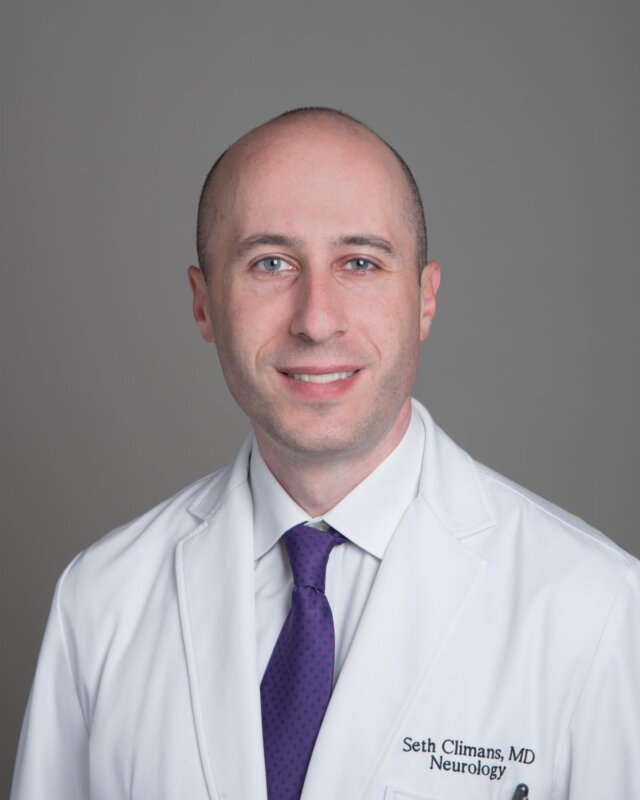 Neuro-oncologist & Associate Scientist, London Health Sciences Centre Research Inc.
Generously funded by DUNN with Cancer
Total awarded amount: $50,000
Project title: “Glioblastoma Risk Factors: A Province-Wide Investigation”
Dr. Seth Climans is an Assistant Professor in the Department of Oncology with cross-appointments in Clinical Neurological Sciences and Epidemiology and Biostatistics at Schulich School of Medicine & Dentistry, Western University. He is a neurology-trained neuro-oncologist using health administrative data to answer important clinical questions in the field and is active in clinical trials for primary brain tumours. He has a clinical interest in primary brain tumors, neurological complications of cancer, and in adolescent and young adult oncology.
Description of the project:
Glioblastoma is the most common and aggressive primary brain cancer in adults, yet most cases occur without a known cause. This study aims to identify biological and environmental factors that may influence glioblastoma risk and support future prevention and early detection efforts.
Using large population-based health and environmental datasets in Ontario, the project will examine two key hypotheses. First, it will assess whether eosinophil counts, a routine blood marketer of long-term exposure to haloalkane industrial pollutants (e.g. chemicals used in refrigerants, industrial solvents, and chemical manufacturing) is associated with increased glioblastoma risk using location-based environmental exposure data linked to residential history.
This research addresses important gaps in understanding why glioblastoma develops and represents one of the first population-level studies to examine both immune-related blood markers and haloalkane exposure in relation to risk. The findings may help identify groups at higher or lower risk, inform future prevention strategies, support environmental health policies, and improve approaches for earlier detection and risk assessment.
Dr. Climans will act as the principal investigator and scientific lead for this project. As a neuro-oncologist and health services researcher with expertise in population-based data, he will lead the study design, execution, and knowledge translation
Dr. Climans will collaborate with a multidisciplinary team on this project:
- Dr. Eric Lavigne – Environmental Epidemiology
- Drs. Phillip Blanchette and Jacques Raphael – Clinical Oncology and population-based cancer research
- Dr. Danilo Giffoni – Translational oncology
- Dr. Stephanie Dixon – Biostatistics and Advanced population health analytics
Impact of receiving the award:
Receiving this grant marks a meaningful step forward in the effort to understand glioblastoma. Because most cases arise without a known cause, clinicians and researchers have had very little to work with in identifying who is at risk and why. This funding allows us to pursue two promising but underexplored leads: whether markers of immune activity, such as eosinophil counts, confer some natural protection against tumour development, and whether long-term exposure to industrial pollutants like haloalkanes increases the risk. A better understanding of the relationship between immunosurveillance and glioblastoma could also open the door to new immunotherapy approaches, offering hope for treatment strategies that go beyond what is currently available.
The expected outcomes of this work include a clearer understanding of whether immune biomarkers can help identify individuals at lower or higher risk, and whether specific environmental exposures warrant public health attention or intervention. Because the study draws on large, population-based datasets across Ontario, the findings will carry statistical weight that smaller studies cannot achieve, and they may point toward practical applications: new risk stratification tools, earlier surveillance for high-risk groups, or evidence to support environmental policy changes. Even null results will be valuable, helping to rule out hypotheses and sharpen the direction of future research.
As a neuro-oncologist, one question comes up almost every time I sit down with a new patient to deliver a glioblastoma diagnosis: “Doctor, why did I get this cancer?” It is a question I have rarely been able to answer with any confidence. This research project brings me one step closer to giving my patients a real answer and, in time, may help us identify and protect the people who are most vulnerable before that conversation ever needs to happen.