From caring for others to learning to care for herself
As a family physician in Sussex, N.B., Dr. Sharon McCutcheon spent decades caring for patients. Like many physicians, she was used to putting everyone else’s needs before her own.
Even when she was experiencing headaches and feeling burned out, Sharon assumed stress was to blame.
In 2011, Sharon visited a colleague to investigate what she thought might be a problem with her sinuses. A CT scan revealed something no one was expecting: a meningioma the size of a small orange. Within hours, she was meeting with a neurosurgeon and learning she would need brain surgery just days before Christmas.
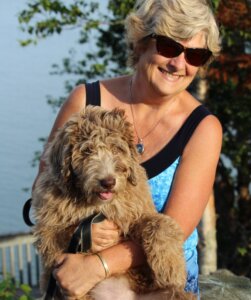
“I realized I had no choice but to put myself ahead this time,” Sharon says. “As a doctor, you’re focused on looking after everyone else.”
Losing control
The surgery was only the beginning.
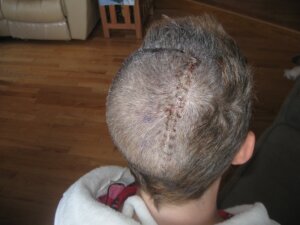
After returning home, Sharon developed a post-surgical infection that sent her back to the operating room. Doctors were forced to remove part of her skull to treat the infection, and months later she underwent another operation to receive an acrylic skull implant. As she navigated a difficult recovery, she was also grieving the sudden loss of a family member during the holiday season.
Alongside these challenges were the invisible emotional struggles that often went unnoticed.
“I lost my self-confidence when I returned to work,” she says. “I felt like I was making mistakes.”
As someone who had always been the person others depended on, Sharon struggled with the loss of independence. Unpredictable seizures meant she couldn’t drive, and even the concern of well-meaning family members could be difficult.
 “I had just looked after two or three thousand patients,” she says. “Then, after the seizures, I wasn’t even allowed to go for a walk by myself.”
Healing beyond the physical
Six years after her surgery, Sharon’s seizures became increasingly frequent and unpredictable. Eventually, she made the heartbreaking decision to close the family practice she had spent years building.
While many people understood the physical effects of a brain tumour, Sharon found it much harder to talk about the emotional impact.
At first, she convinced herself it was “just stress.”
Looking back, she recognizes that anxiety and depression became part of her journey.
“I wanted people to know they don’t have to hide it,” she says. “It’s part of the whole package.”
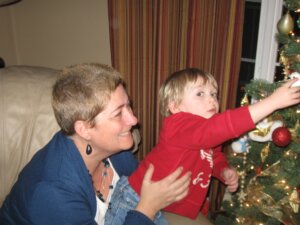 As both a physician and a brain tumour survivor, Sharon gained a new appreciation for what patients experience beyond what can be seen in a medical chart. Living with seizures helped her understand, on a deeply personal level, the realities many of her own patients had quietly faced for years.
Finding healing through writing
Throughout her recovery, Sharon turned to writing.
What began as a personal journal gradually evolved into something much bigger.
“I realized if I wrote it as a book, my grandchildren would understand what happened during this part of my life,” she says.
After years of editing, Sharon submitted her manuscript to Nimbus Publishing. When it was accepted, she hoped her story would offer something she wished she’d had during her own journey: understanding.
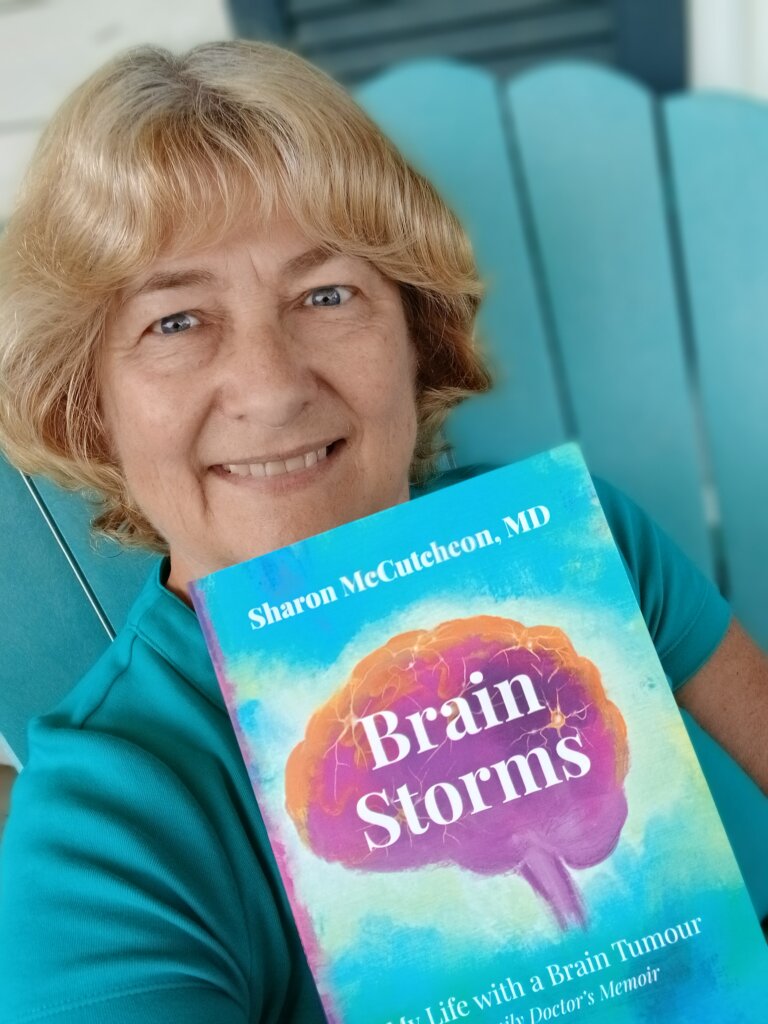
Her memoir, Brain Storms: My Life with a Brain Tumour, shares not only her medical experience, but also the emotional realities of living with a brain tumour, including the anxiety, uncertainty and resilience that often remain hidden. It also reminds readers that humour can be a powerful part of healing.
A message of hope
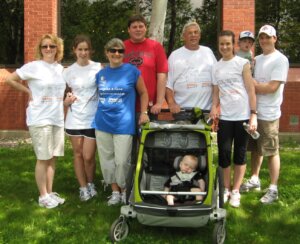
Today, nearly 15 years after her diagnosis, Sharon is doing well. Her MRI scans have become less frequent over time, reflecting years of stability.
She hopes that by sharing her story, other people living with a brain tumour, and the families walking beside them, will feel less alone.
Every brain tumour journey is different, but Sharon believes one thing is universal:
There is no shame in asking for help, acknowledging the emotional impact of a diagnosis or finding your own path toward healing.